
The Economic Case for Wilson’s Fountain:
Reclaiming Free and Equal Elections
by Connor Lashuk
December 5, 2025

Today, Americans’ faith in our democracy is eroding, and with it, the stability that keeps our government representative of the people. As political divisions widen and voters lose faith in the process, few questions feel more urgent than how we choose our leaders.
Elections were intended to be a democratizing innovation; however, they have morphed into a system that privileges wealth, fuels extremism, and enables gatekeeping. The result is a process that costs billions in campaign dollars and erodes two fundamental norms: the legitimacy and representativeness of American governance. This white paper focuses on our current primary system and argues that it violates the democratic vision originally articulated by James Wilson - specifically, his standard of “free and equal elections.” Inspired by Wilson’s vision, Wilson’s Fountain is a repurposing of the United States political committee system that makes a fair nominating process possible. It offers a viable and economically rational alternative that has the fiscal sanity and democratic integrity needed to reform the process of political nomination.
The Problem with Primaries Today
Modern public primaries were designed to expand voter input, but in practice they have become bottlenecks that restrict meaningful participation. The meaning of this is twofold: a) candidates must raise enormous sums before a single vote is cast, and b) this fundraising often depends on wealthy donors and political action committees (PACs). Together, these forces fuel ideological polarization because candidates appeal to a narrow base of highly engaged primary voters rather than the broader electorate.
The 2022 Georgia Senate race exemplifies this distortion. For instance, more than $100 million was spent in the primary phase alone, and, by Election Day, total campaign expenditures topped $380 million. This spending was early in the process, and was directed toward polling, ad buys, opposition research, and staffing, which happened long before voters had a clear sense of who was running. As a result, one truth becomes clear: under the current system, to even enter a race, a candidate must have the financial resources to back their campaign from day one. Thus, instead of campaigns being funded by the public, they are increasingly defined by a handful of wealthy donors.
This front-loading of campaign resources creates a barrier to entry that disqualifies candidates who lack pre-existing financial networks. While recent research suggests that primary voters are not necessarily more ideologically extreme than general-election voters, they are significantly more politically engaged and more inclined to support outsider or anti-establishment figures (https://pac.org/impact/primary-voters-really-extreme). While this is not necessarily a bad thing, combining this dynamic with donor pressure and early media saturation can pull campaigns away from broad-based coalition building and toward narrower appeals that distort representative outcomes. The result is a nominating system that breeds insufficiency, polarization, and disenfranchisement, which is a violation of both the “free” and “equal” spirit of representative democracy.
James Wilson and the Philosophy of Electoral Equality
To better grasp the magnitude of our current system’s departure from the founding principle of popular sovereignty, it is worth revisiting the ideals that shaped America’s democratic vision. James Wilson, a key architect of the Constitution, believed that political legitimacy flows from the people - not parties, not wealth, and not elites. He introduced the clause “elections shall be free and equal” to the 1790 Pennsylvania Constitution. To Wilson, “free” meant universal and uncoerced access to the electoral process, while “equal” meant that each citizen's vote must carry the same weight and influence. He rejected any attempts that would taint this franchise, because if the electoral process was tainted, he warned, the effects would reach “the remotest corners of the state.”
The United States cannot afford to let these principles be diluted. Gerrymandered districts, donor gatekeeping, and primary manipulation are corroding the principle of equal influence. For these reasons, it is of the utmost importance to prioritize Wilson’s philosophy to reimagine what a legitimate, equitable nomination process could look like.
The Economic Dysfunction of Primaries
Public primaries have become an expensive pressure point in American democracy. Consider the following data:
In 2022, Raphael Warnock’s campaign spent over $180 million in total, with nearly half occurring before the general election began (https://www.opensecrets.org/members-of-congress/raphael-warnock/summary?cid=N00046489 Note: While this is an outlier, it shows how front-loaded and expensive primaries have become.
The median cost of a winning Senate campaign in 2022 was $26.53 million (https://www.opensecrets.org/elections-overview/election-trends)
In 2020, competitive House primaries required an average of $650,000 per candidate, often in races where turnout was below 15%.
Donor influence is concentrated: in the 2022 election cycle, just 0.5% of Americans contributed more than $200 to federal candidates (https://www.opensecrets.org)
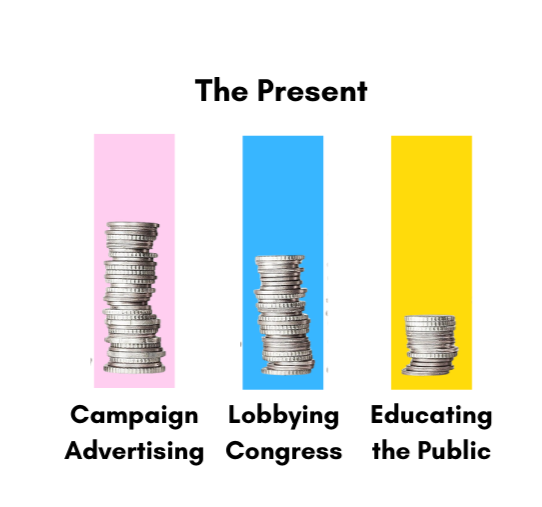
This system violates Wilson’s “equal” standard in clear economic terms. Influence is disproportionately wielded by the media and super donors, not by voters. Moreover, the redundancy of building campaign infrastructure for both the primary and general elections adds millions in financial waste.
It also distorts policy outcomes. Candidates must appeal to narrow, ideologically motivated electorates during primaries, which, consequently, pulls platforms toward the extremes. To sustain this model, they often rely heavily on super-donors and PACs early in the cycle, which creates an implicit obligation to prioritize those interests once in office. This results in general election matchups that often do not reflect the median voter’s preference: a dynamic that fosters political gridlock and poor governance outcomes. Political scientists Michael Barber and Nolan McCarty warn that this polarization has measurable effects that result in a decline in Congress’s legislative capacity and a reduced ability to shape economic policy. This “perpetually gridlocked Congress” dynamic, as administrative scholar Cynthia Farina notes, risks concentrating power in a “president-centered regulatory state” that shifts more power from lawmakers to the president and federal agencies, weakening the checks and balances that keep government accountable to the public. (https://direct.mit.edu/daed/article/150/3/49/102578/Legislative-Capacity-amp-Administrative-Power)
Wilson’s Fountain: An Economic and Democratic Alternative
The Wilson’s Fountain model offers a modern nominating structure that aligns with both democratic principles and economic rationality. Its key components include:
A National Party that oversees broad platform functionality, while local nominating committees control district-level contests.
Multi-round approval voting replaces plurality systems, ensuring nominees earn broad-based support.
No money flows before public support is confirmed. Super PAC funds are unlocked only after a candidate clears a threshold of approval; unused funds are returned.
Technology is central. Secure online voting and open-source civic engagement platforms drastically improve alternate candidate viability. Campaigns use analytics to find and persuade voters, not donors.
The digital civic portal at the core of this system is a transparent, public-facing interface that serves as both a nominating tool and a real-time repository for citizen input. Constituents can track potential candidate positions, participate in multiple elimination rounds, and provide feedback directly, which ensures that the electorate is not just an audience, but a driver of campaign decisions.
Disruption to Realignment
Stage 1
The transition will not happen overnight; rather, it will unfold in stages, starting small, while operating alongside the traditional system. Each phase reveals how economic incentives, voter behavior, and institutional legitimacy shift as the model proves its value.
The alternative nominating system launches in select red and blue districts.
Targeted disruption: Early efforts focus on districts with entrenched incumbents who are unaccustomed to real competition and where voters are eager for transparency and reform.
Low-cost visibility: Because the process is seen as fair, it draws earned media attention, hence, minimizing the need for heavy spending on ads or consultants.
Grassroots momentum builds: Voters recognize a more open nominating structure and begin pressing candidates to participate.
Strategic advantage: While major parties are slow to respond, candidates who opt into the alternative process gain early credibility without the need for major fundraising.
Dual System Pressures
Stage 2
Over multiple election cycles, candidates in competitive districts face a choice: remain in the traditional primary process or experiment with the alternative model. Established incumbents and party-backed nominees, who are still tied to traditional donor pipelines, are unlikely to enter at this stage; however, it is younger, less-experienced, outsider, and third-party candidates (fresh but viable voices who lack an entrenched donor network) who find a strategic advantage in opting into the alternative.
Here: Cost gap becomes clear: Since AMSP bars early fundraising, candidates must choose one path. That choice makes the traditional system’s spending look bloated compared to the new model.
Donor frustration grows: Traditional donors face pressure to give earlier and in large sums, while AMSP bypasses early donor reliance entirely.
Elite Influence Wanes: Because money no longer guarantees access under the alternative model, elite donors see waning influence while constituents gain power.
Consultant pricing inflates: Political vendors tied to the old model inflate costs as campaigns grow more defensive..
Legacy parties ramp up spending: To defend control, they pour resources into gatekeeping, media buys, and legal firewalls.
Civic tech grows fast: Digital tools to verify support, track candidates, and engage voters expand rapidly, which offers a cheaper alternative to traditional field ops.
Public sentiment starts to shift: As the alternative process delivers transparency and reduces noise, voters and small donors begin migrating toward it.

Stage 2 is defined by growth under pressure, because the system is still in flux: voters are split, donors’ motivations shift, and party structures are fragmented. Yet, these growing pains are transitional. The alternative model steadily builds credibility by empowering candidates who could not survive in the donor-driven model, thereby signaling the beginning of a permanent marker shift.
Realignment
Stage 3
As the new nominating structure continues to grow, it finally crosses a tipping point. The model is no longer a home solely for outsiders or third parties, because it begins drawing in traditional party candidates who recognize that legitimacy and momentum now flow through the alternative system. The collapse of the old primary system accelerates. Voters trust it; candidates succeed through it; donors redirect funds toward approval-based platforms, and, as a result, the traditional primary system fades. This is what can be visualized under the alternative system, given the scale of money in the current system:

Pre-nomination costs fall by over 90%. In 2022, candidates for the U.S. House raised a median of $2.1 million, while senators running for reelection raised a median of $11.4 million (!). Because campaign fundraising and expenditures track closely (!), these figures serve as reliable proxies for overall campaign costs. Under Wilson’s Fountain, which prohibits early fundraising and consolidates nomination activities into a single approval-based process, House races could cost $300,000 instead of $2 million; Senate races could drop from $11 million to as low as $2–4 million.
Super PACs become largely irrelevant. With spending restricted until after a candidate has been selected through the National Party’s nominating process, there’s no need for preemptive fundraising arms.
Advertising realigns. Campaign messaging shifts from saturation ad buys to targeted, meaningful public outreach. The focus becomes persuasion, not noise.
Lobbyist power declines as public influence rises. The civic portal enables grassroots pressure, citizen amendments, and real-time engagement, shifting policymaking from the current 80/20 split (donor vs. voter influence) toward a more publicly accountable system. https://dlab.berkeley.edu/news/explaining-80-20-rule-pareto-distribution
Representatives who no longer rely on donor networks must respond to constituents (or risk being voted out). Even powerful caucuses in Congress begin aligning more closely with district-level preferences. Over time, the collapse of traditional party dominance gives rise to “caucus democracy,” where looser, more ideologically focused blocs replace the rigid two-party divide and allow for pragmatic coalitions to form across issues https://www.nytimes.com/interactive/2025/01/14/opinion/fix-congress-proportional-representation.html
Factions evolve. We may see the rise of new coalitions, “pink” and “baby blue” blocs, which prioritize compromise rather than polarized dogma.
Public input becomes institutionalized. The portal’s role as a civic feedback engine ensures that issue priorities are driven by people, not corporate interests or lobbying pressure.
Over time, Wilson’s Fountain could replace the primary process altogether. When citizens and candidates see that a fairer, cheaper, and more responsive system exists, they will simply stop participating in the old one.
Case Study: Georgia Senate Race
The 2022 Georgia Senate race between Raphael Warnock and Herschel Walker is a case study in electoral inefficiency. $380 million were spent in a race that saw months of attack ads and intense donor jockeying https://www.opensecrets.org/news/2022/11/walker-warnock-u-s-senate-race-in-georgia-most-expensive-in-2022-cycle-as-runoff-intensifies/. The primary system filtered out alternative voices early and left voters with a binary that didn’t necessarily reflect broad public sentiment.
Under the alternative nominating system, this race would have unfolded very differently:
Multiple candidates could enter the field without financial barriers.
Approval voting would ensure that a consensus candidate (likely someone more moderate than either finalist) would emerge.
Campaign funding is delayed until after public support is given. While the two major parties and outside groups might still spend heavily, their National Party nominee would enter the general election already having broad community support and the SuperPAC dollars to compete effectively in a general election.
The projected economic impact is stark. Instead of spending nearly $100 million before the general election even began, the nominating process could operate on a fraction of that: perhaps $5 million or less. Community deliberation would replace negative ad cycles. And because the nominee would already represent broad approval, general election turnout efforts would become more efficient and less expensive.
Economic Rationale: Systemic Savings and Equity
The economic upside of Wilson’s Fountain is not limited to campaign savings. It reshapes the entire political economy:
Cost compression: National savings could reach billions per cycle, once primary redundancies and legal overhead are eliminated. Since nomination is consolidated under one transparent process, recurring legal and administrative costs like duplicate FEC filings and ballot-access litigation that currently burden every election cycle would decrease.
Access and equity: Candidates without elite backing gain viable entry, expanding the political pipeline to include underrepresented voices.
Institutional dividends: Reduced gerrymandering litigation, higher trust in governance, and more centrist policymaking generate long-term economic stability. In other words, lower compliance costs, steadier markets, and improved regulatory environments.

In short, by aligning campaign economics with civic legitimacy, Wilson’s Fountain does what the modern primary system fails to do: repair the disconnect between the governed and those who govern.
Conclusion
The promise of “free and equal elections” was never an abstract ideal for James Wilson, because it was the very foundation he believed a legitimate governance had to rest on. Yet today, that promise feels distant in a primary system that has grown bloated with inefficiencies, distorted by wealth, and disconnected from the people it was supposed to serve. However, Wilson’s Fountain offers a way back with an alternative model that has the potential to restore both fiscal responsibility and democratic equality to the heart of what is truly missing in American elections today
In its earliest stages, the model begins modestly by piloting transparency and fair access in select districts where reform is most needed. As it grows, a transition takes shape: younger, third-party, and community-driven candidates start to challenge entrenched power. Soon, it draws public attention to a system that finally feels open again. And eventually, through persistence, the structure reaches realignment, and the old, donor-centered model that we all know fades, where it’s replaced by one grounded in trust, access, and shared legitimacy.
In this sense, Wilson’s Fountain envisions an electoral system where participation is no longer gated by money or power, but sustained by the people themselves - just as it always was meant to be.